This post may contain affiliate links. Please read our disclosure policy.
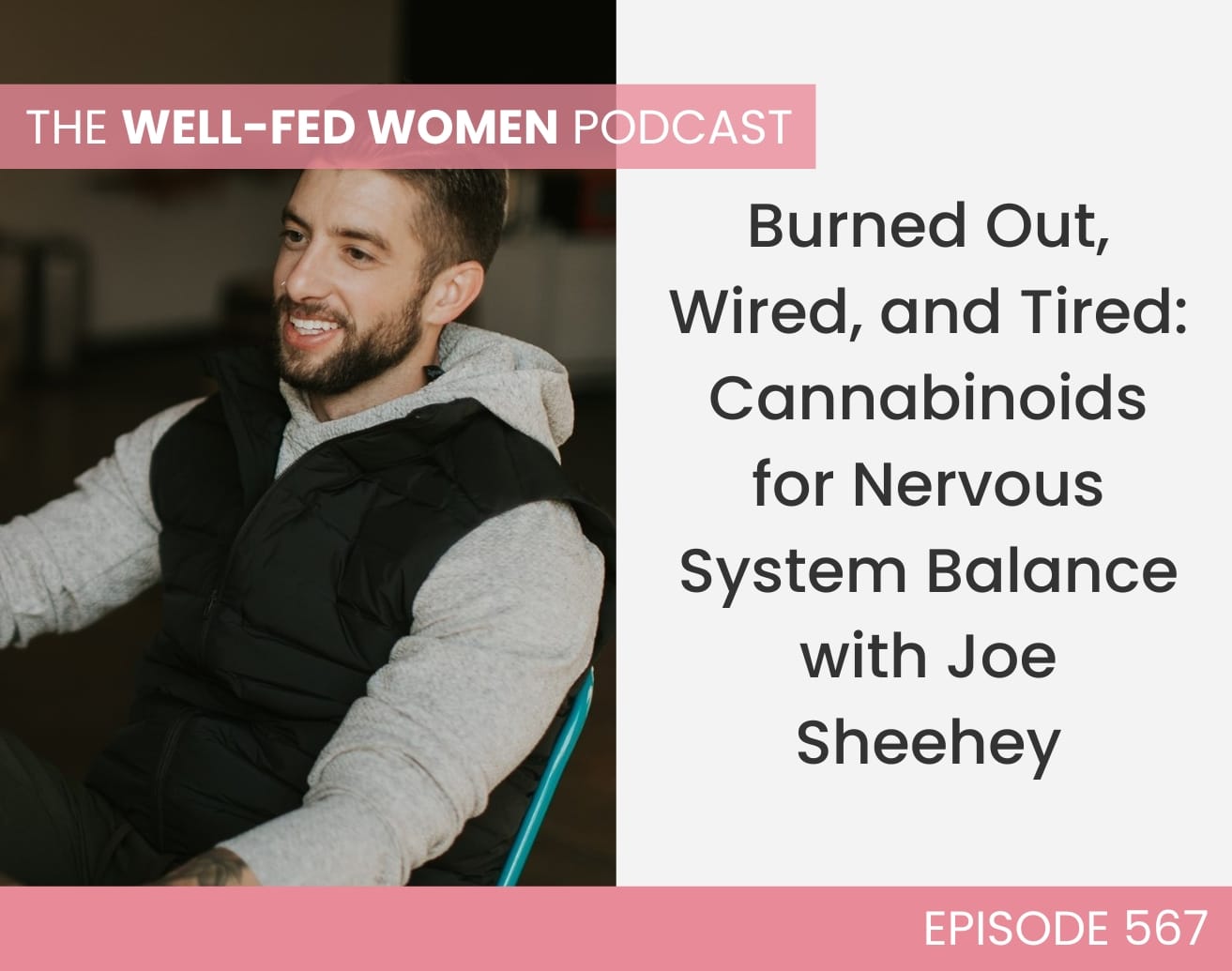
Stress feels louder, sleep feels harder, and your nervous system is fried. Welcome to midlife! In this episode, Joe Sheehey, founder of Cured Nutrition, breaks down the endocannabinoid system, how it impacts stress and sleep, and why it matters even more for women 35+. We also dive into exactly how to tinker with CBD, CBN, and microdosing THC in a practical, science-based way. No hype or overselling, just tools you can use in everyday life
Jump to:
Timestamps:
[1:38] Intro
[6:15] Welcome Joe – can you break down the differences between CBD, CBN, and THC in practical terms?
[11:20] Tell me more about the cannabinoid system and how supplementation actually works.
[14:58] Is there any literature that shows that people become deficient in cannabinoids?
[15:50] Talk to me about CBN
[20:57] Is there a difference the way men respond vs women?
[22:49] If somebody sees the product and it has THC in it, talk to me about the dosing. What is a microdose? What do you see to be most effective?
[28:27] For women who are 35 years old, where does THC shine? Is it more about the relaxation or in how you deal with your daily stress? Are we taking it every day? Do you become dependent on it? Talk to me about it.
[33:44] What are the biggest mistakes people make when trying to teach or even micro using it for the first time?
[36:11] If somebody is really struggling with their sleep, would you recommend they just try CBD or just try CBN or do you think they should try a combination of everything?
[39:55] How does CBN differ from melatonin or magnesium?
[43:50] Do you find that people who practice healthier lifestyles that cannabinoids work more effectively and they need less of it?
[58:19] What would you say to the person who said CBD or CBN did not work for me?
[1:05:14] For the salve, how does it work to target the pain?
Episode Links:
Curednutrition.com/wellfed for 20% off your order
The Journal of Neuropsychopharmacology Article
Article Summary:
High level summary:
The study you are likely referring to is a 2021 clinical trial conducted by researchers at Johns Hopkins Medicine, published in the journal Neuropsychopharmacology.
This study is significant because it identified a “sweet spot” dose for THC (specifically 2.5 mg) that could provide therapeutic benefits (pain relief) without the negative intoxicating effects or “high” associated with larger doses.
Here is a summary of the findings regarding the 2.5 mg dose:
1. The Core Finding: The “Sweet Spot” Dose
The study found that a 2.5 mg dose of oral THC (dronabinol) was the optimal amount to enhance pain relief while avoiding impairment.
- At 2.5 mg: Participants experienced increased pain relief (when combined with a low dose of opioids) but did not report significant “drug liking,” desire to take the drug again, or feelings of being “high” (intoxication).
- At 5 mg and 10 mg: Participants experienced more adverse effects, such as anxiety, dizziness, and a higher potential for abuse (feeling “high”), without necessarily providing better pain relief than the lower dose.
2. Study Context & Design
- Goal: The researchers wanted to see if adding a small amount of THC could make opioids (specifically hydromorphone) more effective, allowing patients to take lower doses of opioids to manage pain (a concept called “opioid-sparing”).
- Method: It was a rigorous “double-blind, placebo-controlled” study. This means neither the participants nor the researchers knew which dose (placebo, 2.5 mg, 5 mg, or 10 mg) was being administered at the time.
- Participants: The study involved healthy adults who were given painful stimuli (like dipping a hand in ice water) to measure how well the drug combinations blocked pain.
3. Why “Not Intoxicating” is the Key Takeaway
The study effectively validated the concept of microdosing for medical purposes.
- Low Abuse Liability: The 2.5 mg dose showed the “lowest risk for abuse.” In scientific terms, this means it didn’t trigger the reward pathways in the brain that lead to addiction or recreational “highs” in the same way higher doses did.
- Functional Relief: Because it didn’t cause sedation or cognitive impairment, this dose suggests it is possible to use THC for medical relief (specifically as an adjunct to other pain meds) while remaining functional and sober.
Summary Table of Doses Tested
THC Dose (Oral)
Effect on Pain
Side Effects / Intoxication
2.5 mg
Enhanced Relief
Minimal / None (Not Intoxicating)
5.0 mg
Mixed Results
Increased dizziness, sedation, and “high”
10.0 mg
Mixed Results
High rate of anxiety, dysphoria, and intoxicationImportant Nuance
This study used oral THC (a pill), which is processed by the liver and can affect people differently than smoking or vaping. While 2.5 mg was found to be non-intoxicating for the study participants, individual tolerance can vary. For a complete novice with zero tolerance, 2.5 mg is generally considered a “threshold” dose—likely to be felt, but unlikely to be fully impairing.
Sponsors:
Go to https://thisisneeded.com/ and use coupon code WELLFED for 20% off your first order.
Go to drinklmnt.com/wellfed and use code WELLFED to get a free 8-pack with any drink mix purchase!
Go to http://mdlogichealth.com/wfcolostrum, and use coupon code WFC15 for 15% off. You can also use code WELLFED for 10% off site wide on all MD Logic Products.
Go to wellminerals.us/vitaminc and use code WELLFED to get 10% off your order.
 Leave a Comment!