
This post may contain affiliate links. Please read our disclosure policy.
Looking for an honest Lumebox review? Here’s my experience with Lumebox red light therapy, and what you need to know before making a purchase.
Red light therapy has seen explosive growth in the last few years. Ever since the first consumer light therapy device was introduced in 2016, red light therapy has gained widespread attention. People are using it for skin health, muscle tension, and pain relief, and seeing incredible results.
And I’m one of them! I’ve used red light therapy for many years, and it’s completely changed my chronic pain. I’ve spent more time than I’d like to admit researching and reviewing different options, and I’ve tested many different brands and devices, including Lumebox.
Wondering if the Lumebox is worth it? Here’s everything I’ve researched, reviewed, and personally tested with Lumebox, and what you need to know before purchasing a red light therapy device. (And yes, they do amazing discounts!)
Jump to:
What is Lumebox?
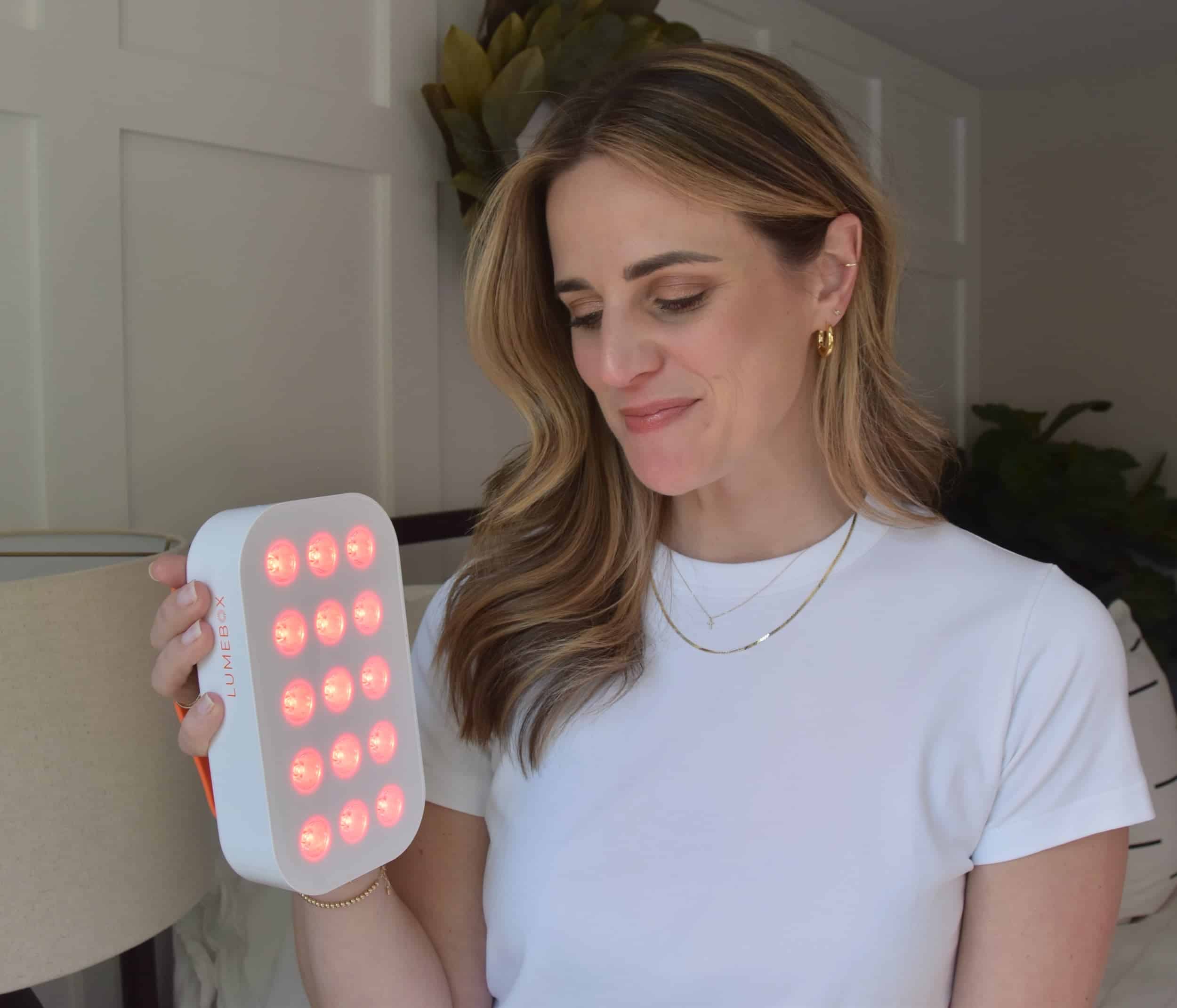
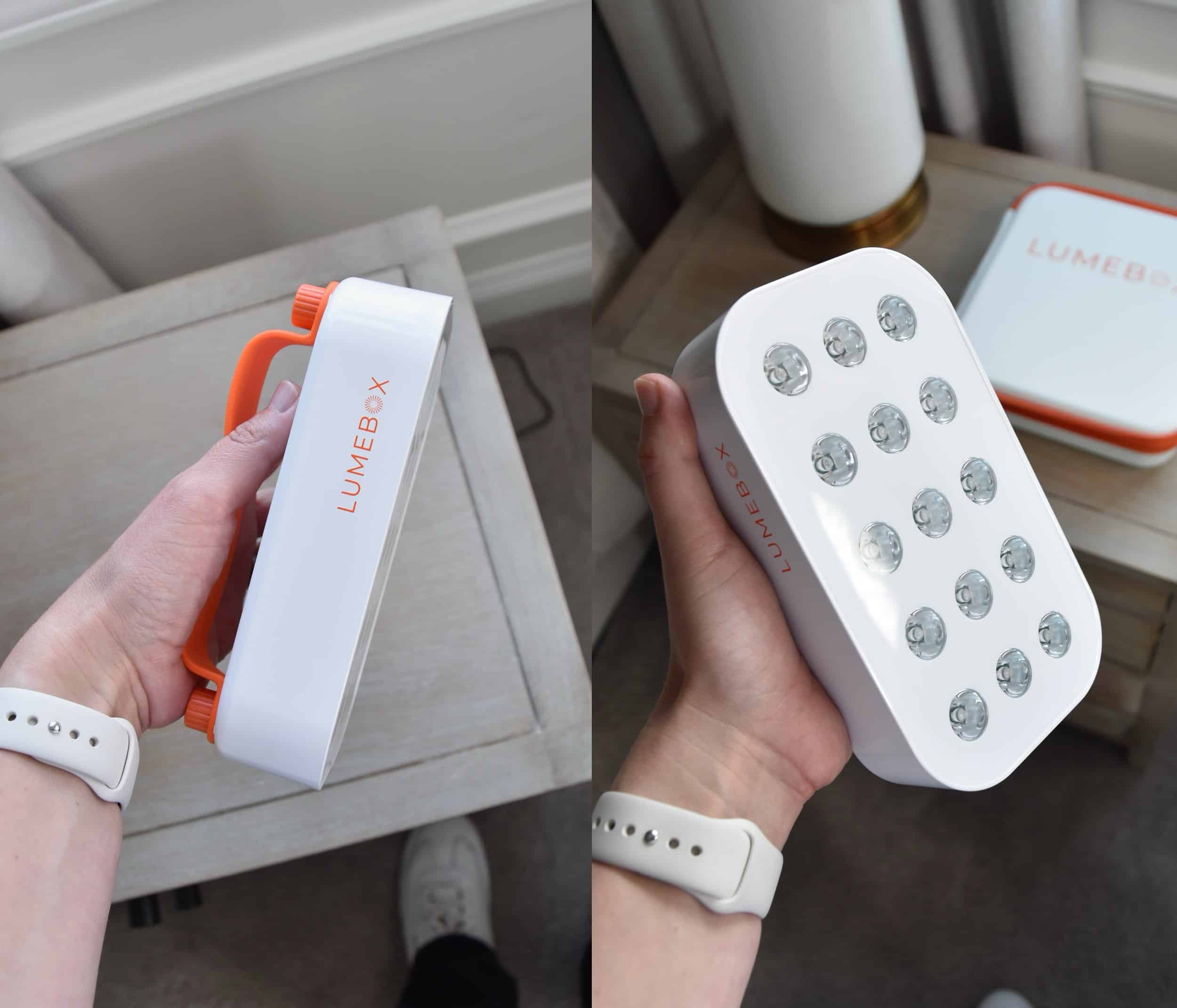
Lumebox is a global red light therapy lifestyle brand dedicated to helping improve people’s health and well-being. They created one of the most popular portable medical-grade red light therapy devices on the market, which delivers both red and near infrared wavelengths simultaneously from each bulb for maximum benefit.
The company was founded in 2022 by Dr. Vivian Chen, an integrative medical doctor with over 14 years of clinical experience. Lumebox is based out of California, and currently operates in the US, Canada, Australia, and the UK.
How Does Red Light Therapy Work?
Red light therapy, also known as photobiomodulation, uses red and near-infrared light wavelengths to stimulate cellular processes and promote healing in the body.
When most people think of light, they think of the illumination that comes from a lamp or flashlight. But, light actually produces energy, and that energy is absorbed by cells when emitted at specific wavelengths.
Red and near infrared light are unique because they fall within a specific range of wavelengths (roughly 630–850 nanometers) that can penetrate the skin and reach deeper tissues, including muscles and joints. This light is absorbed by mitochondria, the tiny powerhouses within cells, which has profound effects. Studies show red light therapy increases ATP (energy) production, reduces oxidative stress, and stimulates healing and regeneration.
In essence, red and near infrared light helps to energize cells, which supports healing, recovery, and cellular function. No other light wavelengths have been shown to do this as effectively.
Benefits of Red Light Therapy
While red light therapy dates back to the 1960s, it’s gained widespread attention recently because people are becoming more aware of the science-backed benefits. Here are some of the main benefits of red light therapy:
- Skin Health: Numerous studies show red light therapy can improve skin health by stimulating collagen and elastin production, reducing inflammation and redness, and enhancing wound healing. It’s also been show to reverse the signs of skin aging.
- Pain Relief: Perhaps my favorite benefit, studies show red light therapy may reduce pain associated with both acute and chronic musculoskeletal conditions. It’s also been shown to improve soreness and muscle recovery in athletes, and may help improve chronic low back pain.
- Reduces Inflammation: Several studies suggest that red light therapy may help reduce inflammation and oxidative stress. It’s been shown to reduce joint inflammation and arthritis by promoting blood circulation.
- Healing and Recovery: Red light therapy has been shown to reduce inflammation, stimulate blood circulation, and increase collagen production, all of which contribute to faster healing. Studies show red light therapy can improve healing in various conditions, including bone fractures and muscle injuries.
- Hair Growth: Recent studies show red light therapy can improve hair density in different types of alopecia. Results show an increase in hair count and thickness after treatment.
Honest Lumebox Review
My review of Lumebox comes after years of experience with many different red light therapy devices. I have seen HUGE improvements in my overall health since incorporating red light therapy. I started using it for chronic pain, but now use it to treat skin issues, muscle tension, headaches, and promote recovery after workouts. Regular red light therapy and sauna use have change how I’m able to function, and my knee and back pain is greatly reduced.
While I’ve seen results from all of the devices I’ve used, Lumebox has provided a noticeable difference in performance. This is likely because of the larger surface area and quick cooldown period. The lights are powerful and provide a high irradiance, and I can easily get 3-4 sessions in on different parts of my body in a short period of time.
Now, let’s quickly review the pros and cons of Lumebox:
What I Love About it:
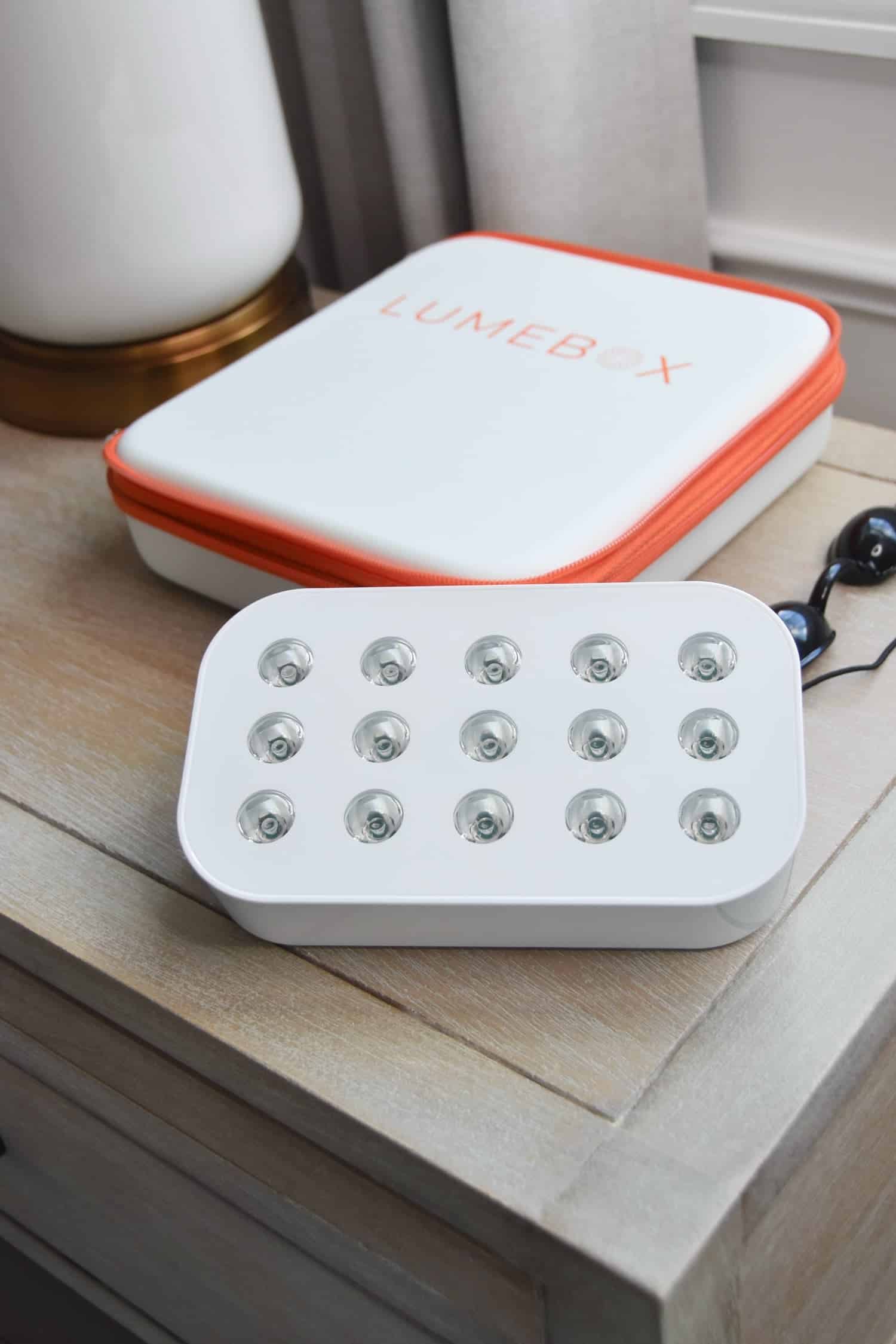
- Larger surface area than any other portable device with 15 light bulbs
- Quick and easy to use
- High irradiance: 140 mW/cm2 for NIR and 125 mW/cm2 for red light
- Fast and efficient—only needs 2-3 minutes to cooldown!
- Provides both red light and near infrared light simultaneously from each bulb
- Can toggle between using red light, near infrared light, or both
- Lab tested to be low EMF at 0 cm away from the device
- Longer batter life than competitors (140 minutes)
- Easy to take anywhere and comes with travel case
- They offer sales and discounts!
- FDA class II device
- Can be used to treat the face and body
Cons:
- Can become warm to the touch after multiple sessions (I haven’t noticed this personally, but it may become too warm to handle if you have sensitive skin)
- Because it’s a portable device, it doesn’t treat the entire body at once
- The button is very sensitive. When repositioning the device, I sometimes accidentally tap the button and change the setting.
- Price (use this link for $260 off)
How to Use Lumebox
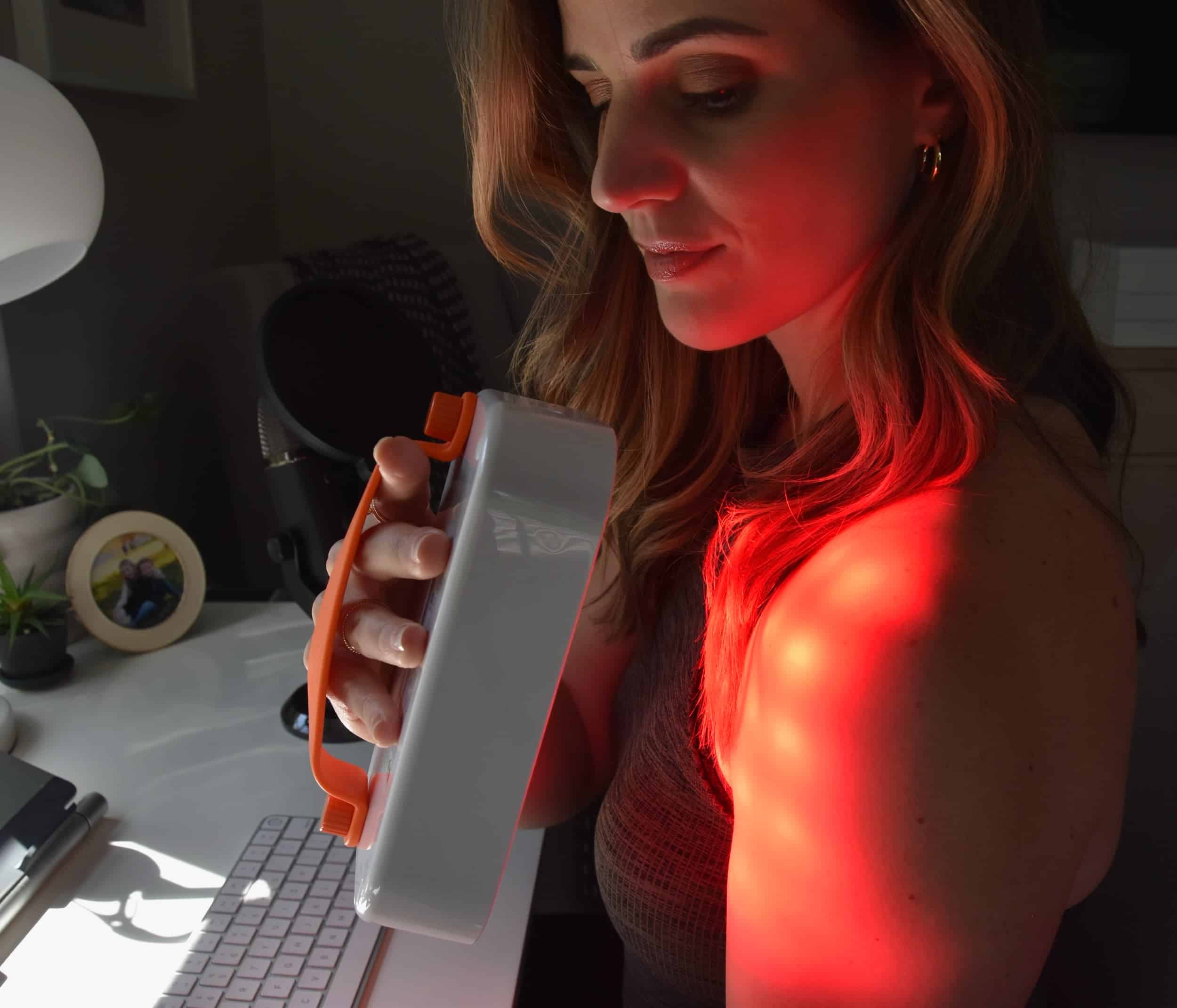
The Lumebox is incredibly easy to use. To turn it on, just click the ON/OFF button once. Then, click the button again to change the settings to red light, near infrared light, or both. To turn it off, hold the ON/OFF button for 2-3 seconds.
The device will stay on for 12 minutes, and a timer will beep at six minutes and again at 12 minutes. After the session is complete, Lumebox will automatically shut off and cool down for 2-3 minutes. Then, you can use it again!
To use the device, just hold it right in front of your skin or place it on the stand and sit 6-12 inches away from it. You can also place the device directly on your body depending on your individual tolerance. Do not place the device directly on your facial skin, and make sure to use protective eyewear when using it on your face or if you have sensitive skin.
That’s it! It typically takes 4 to 12 weeks of consistent use to see results. However, some individuals may see initial improvements within a few weeks. I use it on a daily basis and notice immediate improvements in knee and back pain, headaches, and recovery after workouts.
Is Red Light Therapy Safe?
Yes, red light therapy is considered very safe when used correctly. It’s non-invasive and does not use UV light. Clinical studies show red and near-infrared light at therapeutic wavelengths (typically 630–850 nm) can be used with minimal to no side effects. Because it doesn’t heat the skin or damage tissue, it’s suitable for regular use by most people.
Of course, it’s always important to speak with a trusted medical practitioner before you try red light therapy, especially if you have a medical condition. If you have sensitive skin or eyes, be sure to wear protective eyewear and avoid overuse.
Does Any Red Light Count As Red Light Therapy?
Not all red light counts as red light therapy—and this is a super common misunderstanding. Red light therapy must be within a specific wavelength to be effective, typically between 630 to 850 nm. It also requires a certain intensity to penetrate the skin and reach deeper tissues.
So, just because a light looks red doesn’t mean it’s doing anything therapeutic. Red light bulbs, heat lamps, and party lights are great at providing illumination, but they don’t have the specific wavelengths or irradiance needed to stimulate cellular function. They emit low intensity light in all directions instead of concentrated in a specific dose.
Are All Red Light Therapy Devices The Same?
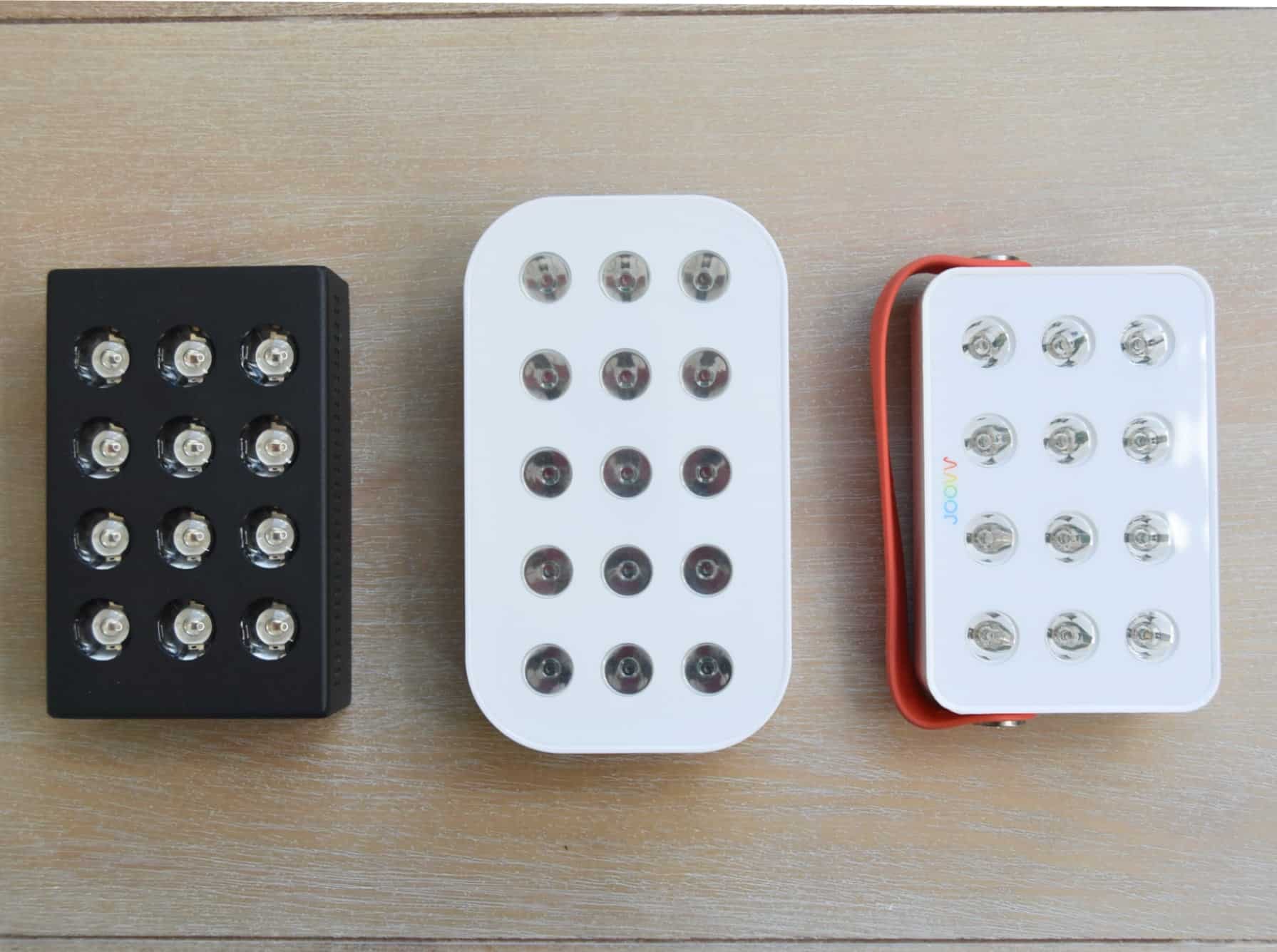
No, red light devices can vary greatly in quality and effectiveness. When looking at red light therapy devices, you need to consider the wavelength, intensity, and coverage. Here’s what to look for:
- Optimal Wavelength: Look for a device that delivers both red (660nm) and near infrared (850nm) wavelengths simultaneously. While red light benefits the skin, near infrared light penetrates deeper into tissues. (Note: products containing “multiple” red and near infrared wavelengths are redundant and not necessary.)
- Irradiance and Intensity: This is key! Irradiance tells you how much energy is reaching your body. For a red light therapy device to be effective, it must provide adequate light intensity at difference distances. An ideal irradiance is between 25 mW/cm² and 120 mW/cm². Some companies list irradiance at the source (not at treatment distance), which can be misleading. Always look for lab testing that confirms irradiance at 6-12 inches away, where you’ll actually be using it.
- Total Coverage: Smaller, handheld devices are lightweight and easy to use, while larger panels are more effective for vast problem areas. Ultimately, the more coverage a device provides, the faster and more effective the treatment will be. When assessing comparable devices, make sure to look at the number of bulbs and coverage area, especially if they are similar in price.
After reviewing comparable devices, I personally chose Lumebox because the company’s strict standards of quality and effectiveness. It’s lab tested by a third party for high irradiance, safety, and EMF exposure. It also has an entire extra row of red light bulbs when compared to other handheld devices, which increases the surface area without increasing the price.
Lumebox vs Joovv
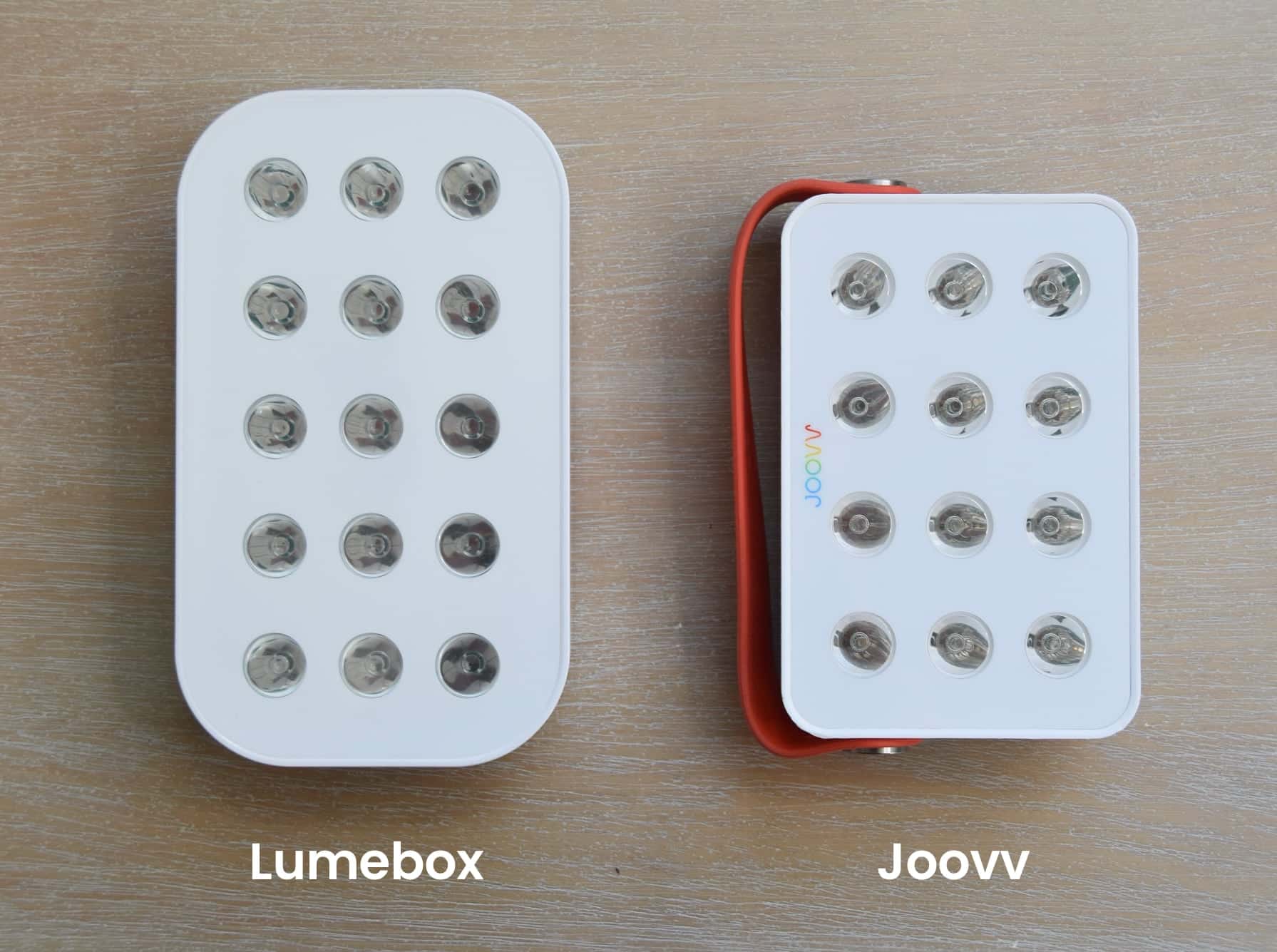
I have both the Joovv and Lumebox devices, and have noticed a few key differences between them. The main difference between the Lumebox vs Joovv is the surface area. The Lumebox handheld device has 15 light bulbs and measures 7.25 inches long, whereas the Joovv Go has 12 light bulbs and is 5.75 inches long.
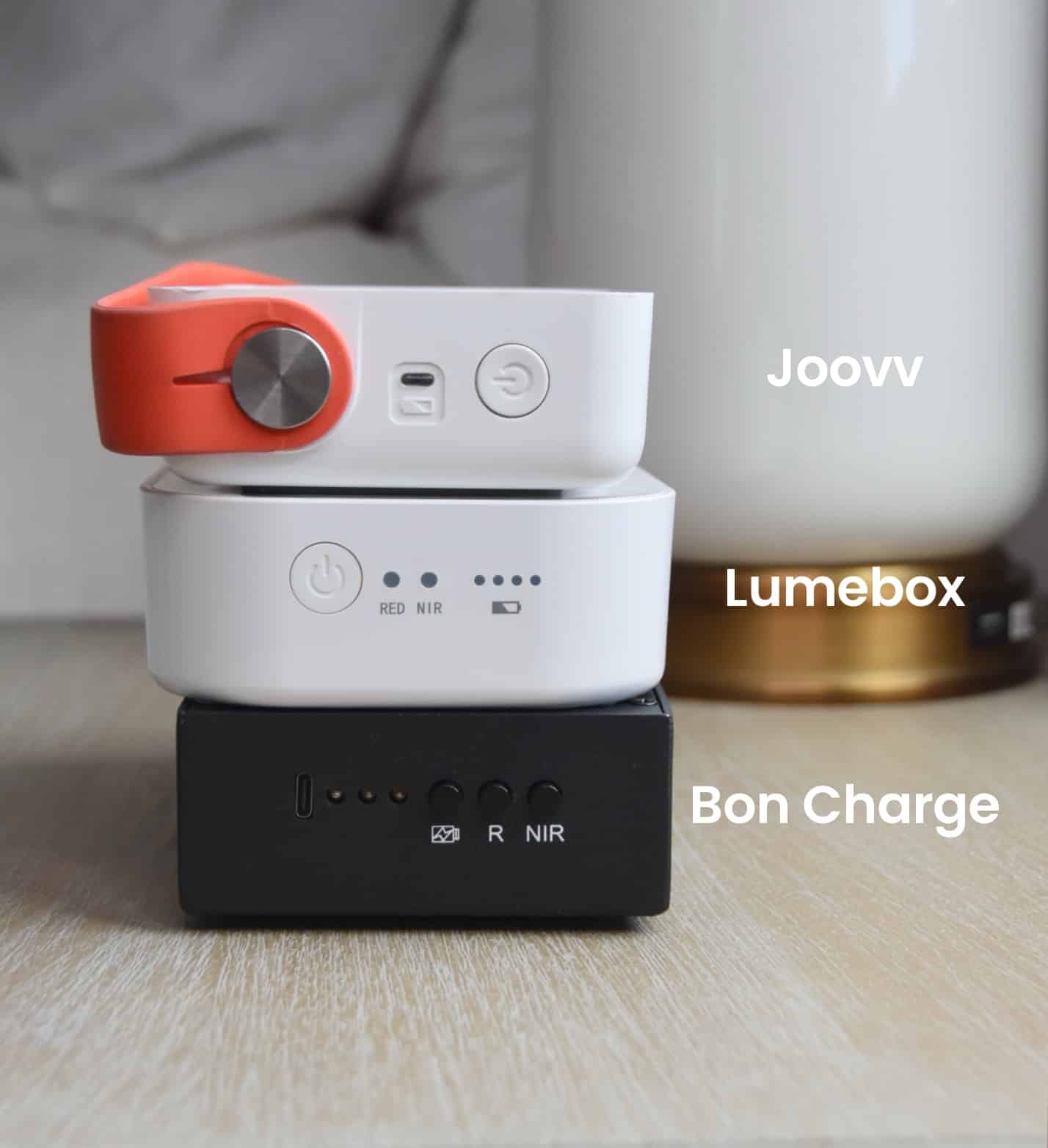
Another big difference is the cooldown period. After using the Joovv device for 10 minutes, it requires a full 10 minutes to cool down before you can start up it up again. With the Lumebox, it works for a full 12 minutes, then needs to cool down for 2-3 minutes. This allows you to treat multiple areas more efficiently, which is a huge bonus for me.
Both devices offer red and near infrared light therapy, but the Joovv does not allow you to toggle between settings. By default, you get both wavelengths every time you use it. With the Lumebox, you can treat with both, or switch it to only red light or near infrared light.
While Joovv makes an incredibly high quality red light therapy device with optimal wavelengths and irradiance, I prefer the Lumebox and use it nightly because of the increased surface area and shorter cooldown period. With the standard discount, the Lumebox is about $100 cheaper than Joovv—so it’s an easy decision.
Lumebox vs Bon Charge
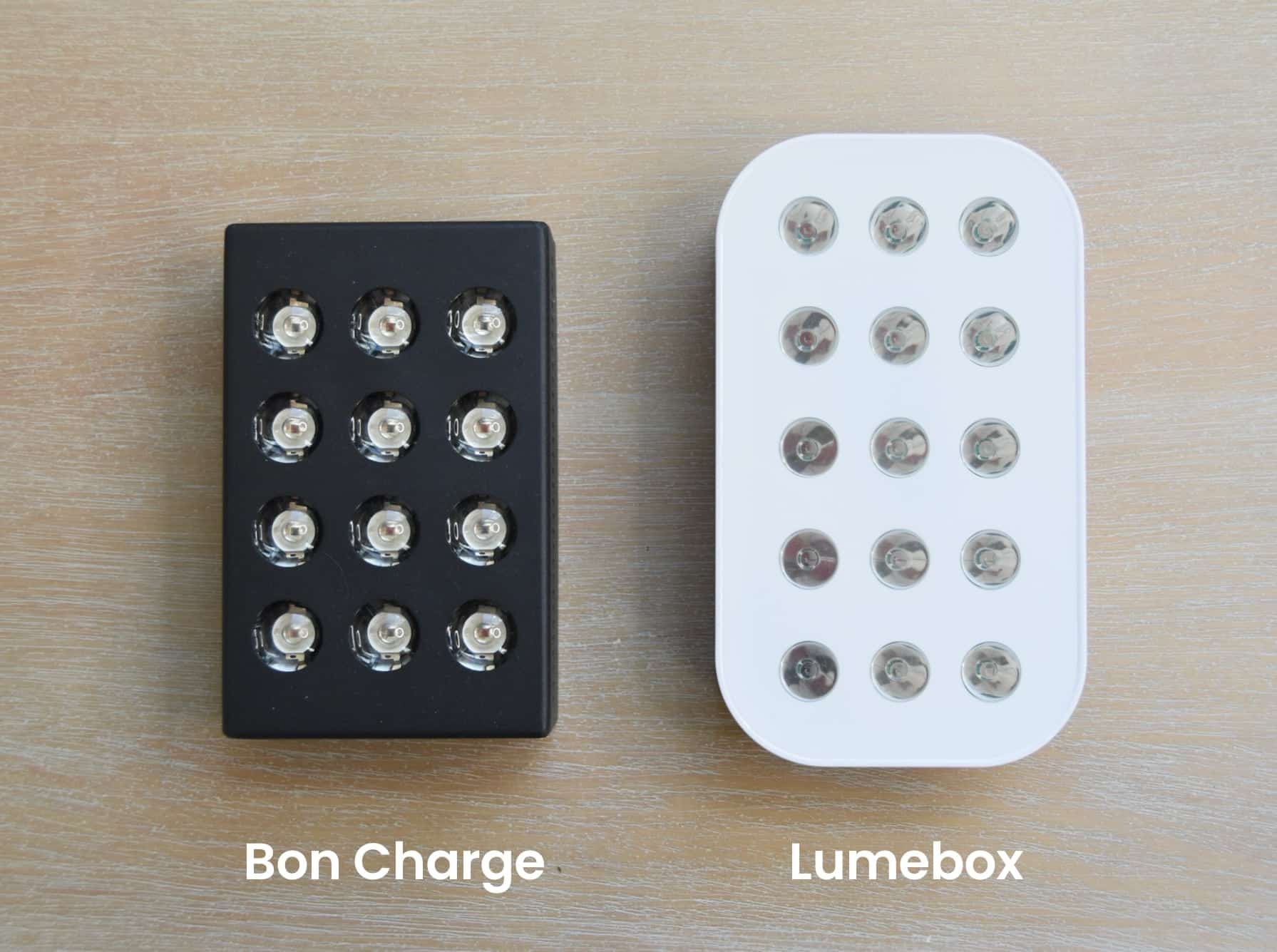
After using both the Lumebox and Bon Charge Mini device, I’ve noticed some key differences. The biggest difference between Lumebox vs Bon Charge is the quality of the bulbs. Bon Charge offers 12 light bulbs and measures 5.9 inches long, but six are red light bulbs and six are near infrared bulbs. This cuts down on the coverage area for treatment. In comparison, Lumebox has 15 light bulbs that offer both red and near infrared light, and it measures 7.25 inches long.
Because there are fewer bulbs that emit red light, the Bon Charge can turn on and stay on for awhile. There is no timer, and there is no forced cool down period. Both the Lumebox and Bon Charge devices offer the option to treat with both red light or near infrared light, or switch to only one at a time.
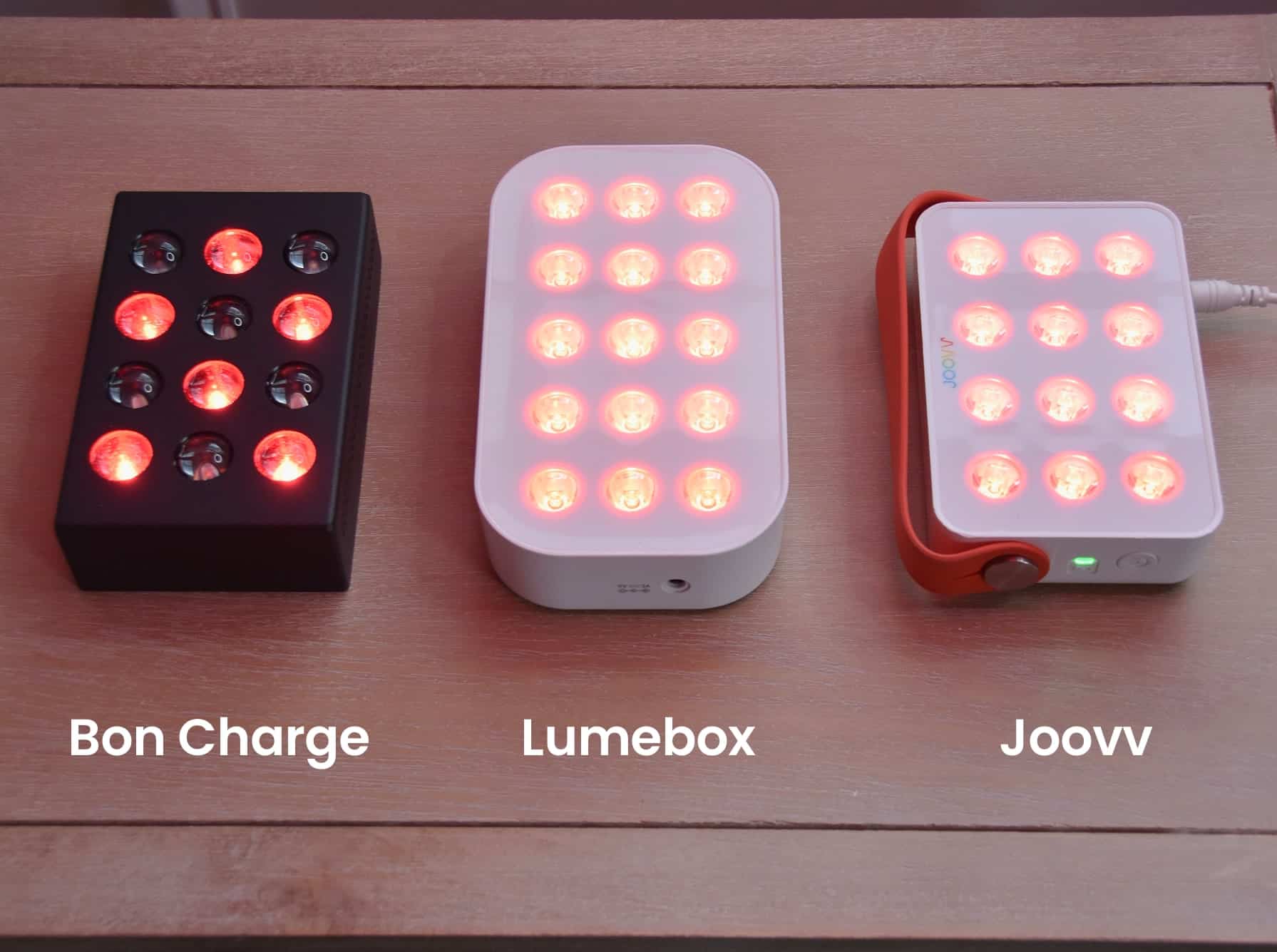
While Bon Charge is a great high quality device that offers optimal wavelengths, high irradiance, and low EMF, I prefer the Lumebox because of the increased surface area and bulbs with both red and near infrared light. The treatment is more efficient and effective, which is important to me.
Does Lumebox Offer Discounts?
Yes! While the Lumebox retails for $629, they do sales a few times a year. You can also get $260 off with this link year round! No coupon code is needed—once you click the link you’ll see the discounted price. You can also pay with HSA/FSA.
Lumebox FAQS
Is a red light therapy mask better than a panel?
If you’re looking to utilize red light for skin health, getting a red light therapy panel is more versatile and effective. Light therapy masks are fairly low power and are limited to facial skin, while panel devices can treat the whole body and produce more systemic health benefits.
Should I wear protective eyewear when using red light therapy?
Wearing protective eyewear is generally recommended when using red light therapy, especially if you have sensitive eyes. While some people choose not to wear them for treatment on the body, it’s important to use them when the light beam is directly in front of your face.
Should I wear clothes when using red light therapy?
For red light therapy to be effective, direct skin exposure is best. You can wear clothes on other parts of your body, just make sure the red light is reaching the treatment area directly. If you’re treating your face, remove all makeup first.
Is Lumebox low EMF?
Yes, Lumebox is low EMF. The device is independently tested at 0 cm from the device. This is above and beyond, as most companies report their readings at six inches away. After reviewing the results, Lumebox measured at 0.2uT, which is very low—common household appliances like hair dryers would be 50-100x that.
Can I place Lumebox on my skin?
This depends on your individual tolerance. The device is designed to be used close to skin, but it does generate heat and can become warm to the touch. Most people place it on their skin or under clothes without issue. If you have sensitive skin, consult with a dermatologist or healthcare provider. For facial treatments, a distance of 6 inches (15 cm) is recommended.
Where to Buy
The best place to purchase Lumebox is directly from their website. Shipping is fast and they offer a $260 discount. They have a 30-day return policy and a limited one-year warranty. While I’ve had absolutely no issues with the function and operation of the Lumebox, the customer service is quick an reliable, and I feel confident knowing I can get support if I need it.
Final Thoughts
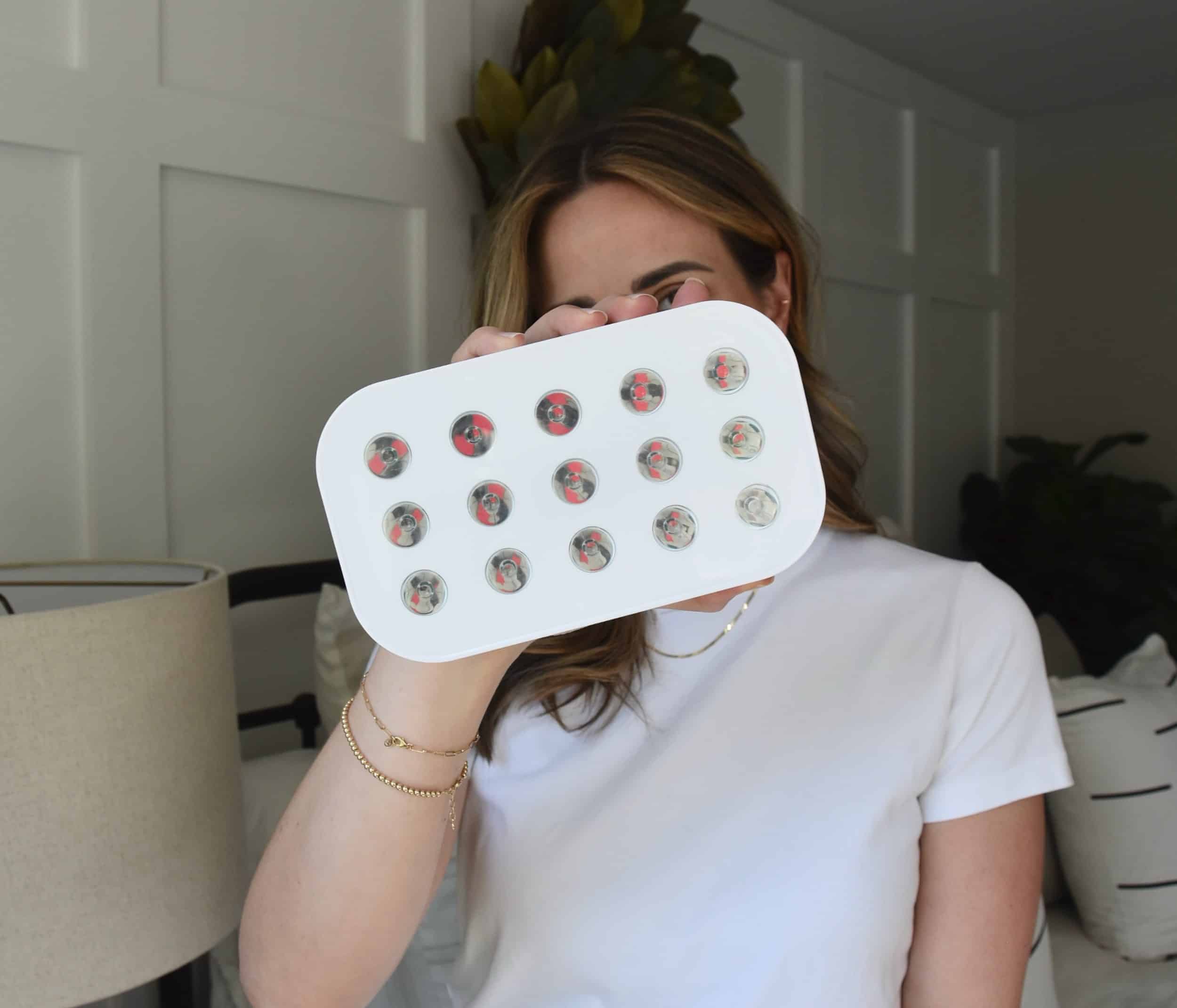
After reviewing and using many different red light therapy devices on the market, I much prefer the Lumebox. It’s what I use nightly, and I’ve noticed a huge difference in my chronic pain, recovery, and skin health. It’s quick and easy to use, and I love the larger surface area.
Because I do my red light therapy at night before bed, I want to be as efficient as possible. The quick cooldown period allows me to target multiple areas within a 30-40 minute period. It’s also one of the only devices to have clear lab tests showing its low EMF at 0 cm away. Lastly, I love that it has a very long battery life, and I can travel with it without needing the charging cable.
While I’ve used many different devices, my best experience thus far has been with Lumebox. It works incredibly well, and I don’t go a day without it!
Have more questions about my Lumebox review? Let me know in the comments below!



Liz says
Hi Noelle, thank you for your great reviews especially on lumebox. I’ve been looking to purchase for ages but haven’t totally trusted any reviews so far. My question is can you recommend a slightly larger lumebox item as I really need it for my back so the hand held one won’t be practical. Also, how much coverage does it give – is it just the size it is, so would just say treat a knee and how long do you leave it on one area for? Thank you
Mary says
I want to use Lumebox for hair growth. Is there a special device for using on the scalp?
Jesie says
Hi Thank you for all your research and your reviews. Is there a product out there that you recomend that is a flat panel?
Noelle Tarr, NTP, CPT says
I have the Joovv red light panel. It’s lasted me over 7 years and is a work horse!
Peggy Koontz says
Is Lumebox good for anxiety? If so, where on the body do you use it for that issue? Thank you.
Noelle Tarr, NTP, CPT says
I definitely use it when my nervous system is dysregulated. I lay it right on my chest and/or throat.
a krantz says
can it be used on dogs
Noelle Tarr, NTP, CPT says
Yes, they are actually doing more research on red light for animals, specifically for osteoarthritis and joint pain, and the results are promising!
Karen Duchien says
Will this work to generate hair growth? My hair has thinned partially due to RA meds & likely due to no hormones. Hair also went from baby fine to infant fine. Would red light therapy help?
Noelle Tarr, NTP, CPT says
It may help, but I’d keep your expectations realistic. The strongest evidence for red light therapy is in androgenetic (pattern) hair loss. Studies consistently show improvements in hair density when it’s used regularly for several months.
The good news is that red light therapy is generally very safe. I think it’s a reasonable tool to try since it may help support healthy hair follicles and reduce inflammation. Just don’t expect it to solve the problem on its own. If your hair loss is being driven by hormones, medication, or nutrient deficiencies, addressing those root causes will likely make the biggest difference.